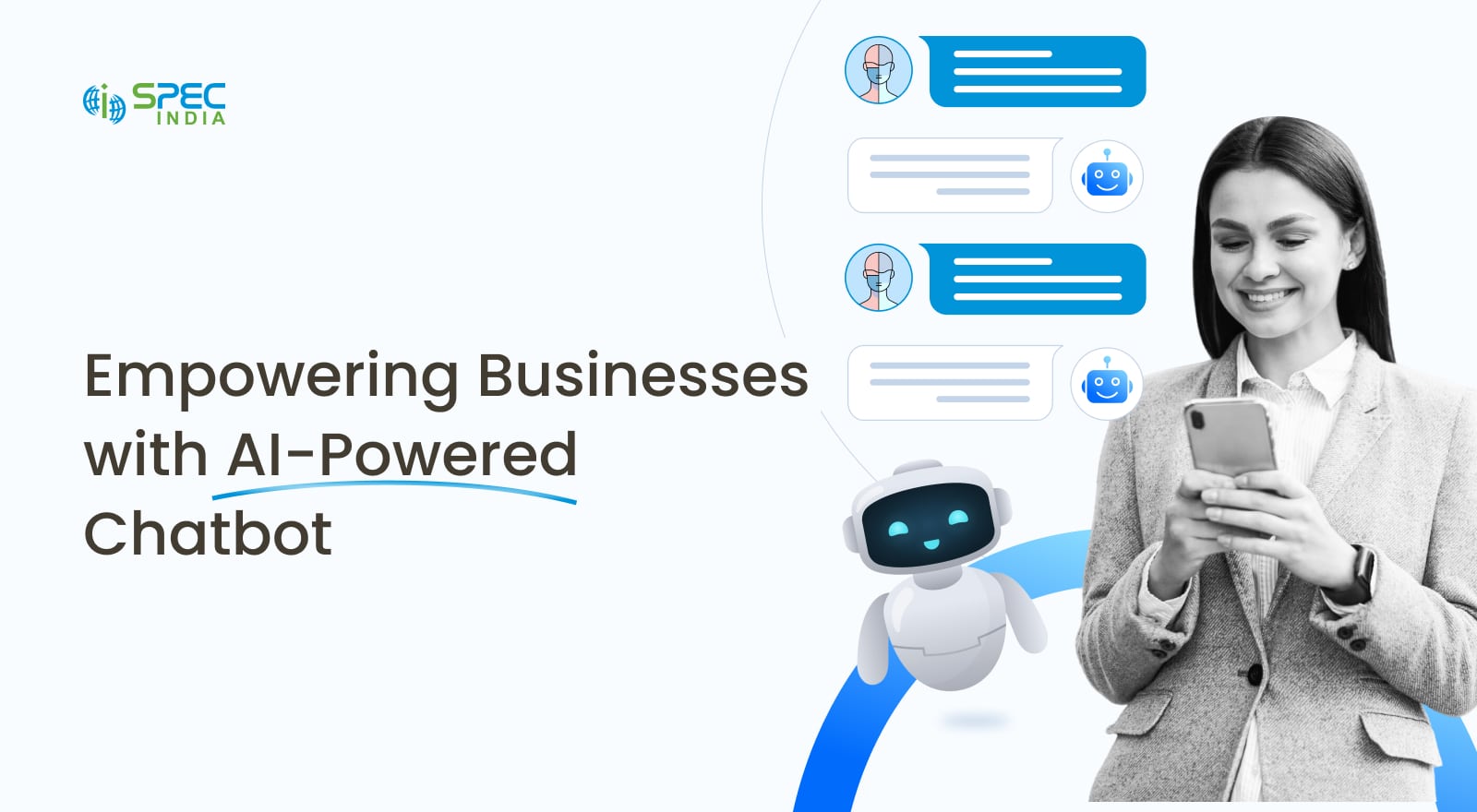
Voice AI and Chatbots: The Next Frontier for Zimbabwe Customer Service
Introduction
Picture this: it is 11:30 PM on a Friday night in Harare. A customer wants to know if a pharmacy in Avondale has a specific medication in stock. The pharmacy is closed. The owner is asleep. But the pharmacy's AI chatbot is wide awake — answering the question instantly, providing the medication's price, and offering to send a reminder when the pharmacy opens at 8 AM. The customer gets the information they need. The pharmacy owner wakes up to a new appointment booking. Nobody had to work overtime.
This is not a futuristic scenario. It is happening right now in Zimbabwe, and the businesses deploying voice AI and chatbot technology are gaining a significant competitive edge over those that are not. Customer service has always been a differentiator in Zimbabwe's business landscape — but the traditional model of hiring more staff to handle more enquiries is expensive, inconsistent, and unsustainable as businesses grow.
Voice AI and chatbots offer a fundamentally different approach: intelligent, automated customer interactions that are available 24 hours a day, seven days a week, in multiple languages including Shona and Ndebele, at a fraction of the cost of human agents. This guide explores what these technologies are, how Zimbabwe businesses are using them right now, what results they are achieving, and how you can implement them in your own business — regardless of your size or industry.
Understanding Voice AI and Chatbots: What Are We Actually Talking About?
Before diving into implementation and results, it is worth clarifying what voice AI and chatbots actually are — because these terms are often used loosely and sometimes interchangeably when they refer to quite different technologies.
Chatbots: Text-Based Conversational AI
A chatbot is a software application that simulates human conversation through text. When a customer sends a message to your business — via WhatsApp, your website, Facebook Messenger, or a dedicated app — a chatbot can respond automatically, answer questions, collect information, process requests, and guide the customer through a journey without any human involvement.
Modern chatbots fall into two broad categories:
- Rule-based chatbots follow pre-programmed decision trees. They are reliable and predictable but limited to the scenarios their creators anticipated. A rule-based chatbot for a restaurant might handle table bookings, menu enquiries, and opening hours perfectly — but struggle with unusual requests.
- AI-powered chatbots use natural language processing (NLP) and machine learning to understand the intent behind a message, even when it is phrased in unexpected ways. These bots learn from interactions over time and can handle a much wider range of conversations. They are more expensive to build but dramatically more capable.
Voice AI: Spoken Conversational Interfaces
Voice AI takes the chatbot concept and applies it to spoken language. Instead of typing a question, a customer speaks it — and the AI responds in natural speech. Voice AI systems combine speech recognition (converting spoken words to text), natural language understanding (interpreting the meaning), and text-to-speech synthesis (generating a spoken response).
Voice AI is particularly relevant for Zimbabwe's market for several reasons. Many Zimbabweans are more comfortable speaking than typing, especially in local languages. Voice interactions are faster than typing on a small smartphone keyboard. And for businesses that receive high volumes of phone enquiries — which is most businesses in Zimbabwe — voice AI can automate a significant portion of those calls without requiring customers to change their behaviour.
The Convergence: Omnichannel AI Customer Service
The most sophisticated implementations combine both: a customer might start a conversation via WhatsApp text, continue it through a voice call, and receive a follow-up via SMS — all handled by the same underlying AI system that maintains context throughout. This omnichannel approach is where the technology is heading, and forward-thinking Zimbabwe businesses are already building toward it.
Why Zimbabwe Businesses Need This Technology Now
The case for AI-powered customer service in Zimbabwe is compelling, and it is driven by several factors that are specific to the local market.
The Customer Service Gap Is Costing You Business
A 2024 survey of Zimbabwe consumers conducted by a Harare-based market research firm found that 68% of respondents had abandoned a purchase or switched to a competitor because they could not get a timely response to a question. That is not a small number — it represents more than two-thirds of your potential customers walking away because your customer service could not keep up with demand.
The same survey found that 74% of Zimbabwe consumers expect a response to a business enquiry within two hours, and 41% expect a response within 30 minutes. For most small and medium businesses operating with limited staff, meeting these expectations consistently is simply not possible without automation.
Staff Costs Are Rising While Availability Remains Limited
Hiring dedicated customer service staff in Zimbabwe is increasingly expensive. A competent customer service representative in Harare commands a salary of $350-$600 per month, plus benefits, training costs, and management overhead. And even with a full-time employee, you are only covering business hours — typically 8 AM to 5 PM, Monday to Friday. Evenings, weekends, and public holidays remain uncovered.
An AI chatbot, by contrast, costs $80-$300 per month to operate (depending on complexity and volume), handles unlimited simultaneous conversations, never calls in sick, never has a bad day, and is available every hour of every day. The economics are difficult to argue with.
Zimbabwe's Mobile-First Culture Is Perfect for Chatbots
Zimbabwe is a mobile-first country. The majority of internet access happens through smartphones, and the majority of business communication happens through WhatsApp. This is actually ideal for chatbot deployment — WhatsApp Business API integration allows businesses to deploy sophisticated AI chatbots directly within the messaging platform that their customers already use and trust.
There is no app to download, no new platform to learn. Customers simply message your business on WhatsApp as they always have — and now they get instant, intelligent responses at any hour.
Multilingual Support Is a Genuine Competitive Advantage
Zimbabwe has 16 official languages, with Shona and Ndebele being the most widely spoken alongside English. Many Zimbabwean consumers — particularly outside major urban centres — are more comfortable communicating in their first language. Businesses that can serve customers in Shona or Ndebele build stronger relationships and reach a broader market.
Modern AI language models have made significant progress in supporting African languages, and several Zimbabwe-focused technology companies are building chatbot solutions with genuine Shona and Ndebele capability. This is not just a nice-to-have feature — it is a meaningful differentiator in a market where most competitors are English-only.
Real Zimbabwe Businesses Using AI Chatbots: What the Results Look Like
Theory is useful, but results are what matter. Here are examples of how Zimbabwe businesses across different industries are deploying chatbot and voice AI technology — and what they are achieving.
Case Study 1: Harare Insurance Broker Reduces Enquiry Response Time by 94%
Sunrise Insurance Brokers, a mid-sized insurance brokerage operating from offices in Harare's Eastlea suburb, was struggling with a common problem: their sales team was spending 60-70% of their time answering repetitive enquiries about policy types, premiums, and coverage details — leaving little time for actual sales conversations with qualified prospects.
In early 2025, they deployed a WhatsApp AI chatbot that could answer questions about their full product range, provide indicative premium quotes based on customer inputs, explain policy terms in plain language, and schedule appointments with human brokers for customers ready to purchase.
The results after six months:
- Average response time to initial enquiries dropped from 4.2 hours to 15 minutes
- Sales team time spent on repetitive enquiries fell from 65% to 18%
- Monthly qualified appointments booked increased by 87%
- Customer satisfaction scores (measured via post-interaction surveys) improved from 6.2/10 to 8.7/10
- Monthly revenue increased by 34% as the sales team focused on closing rather than answering FAQs
The chatbot cost $180 per month to operate — a fraction of what a dedicated enquiry-handling employee would cost, and available 24/7 rather than 8 hours a day.
Case Study 2: Bulawayo Retail Chain Handles 800+ Daily Customer Queries Automatically
Ndlovu Home & Hardware, a Bulawayo-based retail chain with three stores in Nkulumane, Luveve, and the CBD, implemented an AI chatbot across their WhatsApp Business account and website in mid-2024. Their primary challenge was managing the volume of stock availability enquiries — customers calling or messaging to ask whether a specific product was in stock before making the trip to the store.
Their chatbot integrates directly with their inventory management system, allowing it to provide real-time stock availability information, current pricing, and store location details. It can also process click-and-collect orders, allowing customers to reserve items for pickup.
Key outcomes:
- The chatbot now handles over 800 customer interactions per day across all channels
- Phone call volume to stores dropped by 61%, freeing staff to focus on in-store customers
- Click-and-collect orders (a new revenue stream enabled by the chatbot) now account for 23% of total sales
- Customer complaints about "wasted trips" (arriving to find items out of stock) dropped by 89%
- The business estimates the chatbot saves the equivalent of 2.5 full-time staff positions in customer enquiry handling
Case Study 3: Gweru Medical Clinic Improves Appointment Management with Voice AI
Midlands Family Clinic in Gweru faced a challenge familiar to healthcare providers across Zimbabwe: their reception staff were overwhelmed with appointment booking calls, often resulting in long hold times and missed calls from patients who gave up waiting. The clinic was losing potential patients to competitors simply because they could not answer the phone fast enough.
They implemented a voice AI system that answers incoming calls, handles appointment bookings and cancellations, provides information about clinic services and operating hours, and routes complex queries to human staff. The system speaks both English and Shona, which is particularly important given Gweru's demographics.
Results after four months:
- Missed call rate dropped from 34% to 4%
- Appointment no-show rate fell by 28% (the AI sends automated reminders)
- Reception staff time spent on routine calls dropped by 55%, allowing them to focus on in-clinic patient care
- Patient satisfaction scores for "ease of booking" improved from 5.8/10 to 9.1/10
- Monthly new patient registrations increased by 41%
Key Applications of Voice AI and Chatbots for Zimbabwe Businesses
The use cases for this technology extend across virtually every industry. Here are the most impactful applications for Zimbabwe's business landscape.
Customer Enquiry Handling and FAQ Automation
The most immediate and universal application is automating responses to common customer questions. Every business has a set of questions they answer dozens of times per day: What are your opening hours? Where are you located? What does this product cost? Do you have X in stock? Is this service available in my area?
A well-configured chatbot can handle 60-80% of these enquiries without human involvement, freeing your team to focus on complex queries, sales conversations, and relationship building. The key is identifying your most common questions and ensuring the chatbot answers them accurately and helpfully.
Appointment Booking and Scheduling
For service businesses — clinics, salons, law firms, consultancies, repair services — appointment booking is a high-volume, low-complexity task that is ideal for automation. An AI booking system can check availability in real time, confirm appointments, send reminders, handle cancellations and rescheduling, and maintain a waiting list for popular time slots.
The business impact is significant: fewer no-shows (because reminders are sent automatically), better utilisation of available slots, and staff freed from the administrative burden of managing a diary manually.
Order Processing and Status Updates
For retail and food businesses, chatbots can handle the entire order journey: taking the order, confirming details, processing payment via EcoCash or card, providing order confirmation, and sending status updates through to delivery or collection. Customers can also query their order status at any time without needing to call or message a human.
Lead Qualification and Sales Support
For businesses with longer sales cycles — property, insurance, B2B services, high-value retail — chatbots can serve as the first point of contact for potential customers, gathering information about their needs, qualifying their interest and budget, and routing genuinely interested prospects to the appropriate human sales person. This ensures your sales team spends their time on conversations that are likely to convert, rather than on initial enquiries that may not be serious.
After-Sales Support and Complaint Handling
Customer service does not end at the point of sale. Returns, complaints, warranty queries, and technical support requests are all areas where chatbots can provide immediate assistance, log issues, and escalate to human agents when necessary. Handling these interactions quickly and professionally has a significant impact on customer retention and word-of-mouth referrals.
Implementing Chatbot Technology in Your Zimbabwe Business: A Practical Roadmap
Understanding the technology is one thing — actually implementing it is another. Here is a practical framework for Zimbabwe businesses considering their first chatbot deployment.
Phase 1: Define Your Use Case and Goals (Week 1-2)
Start by identifying the specific problem you want to solve. Do not try to automate everything at once. The most successful chatbot implementations start with a single, well-defined use case — typically the highest-volume, most repetitive customer interaction your business handles.
Ask yourself:
- What questions do we answer most frequently?
- Where do customers experience the longest wait times?
- What tasks consume the most staff time without requiring human judgement?
- What customer interactions happen outside business hours that we currently miss?
Set measurable goals: reduce response time from X hours to Y minutes, handle Z% of enquiries automatically, increase appointment bookings by X%.
Phase 2: Choose Your Platform and Channel (Week 2-3)
For most Zimbabwe businesses, WhatsApp Business API is the right starting point. Your customers are already there, the interface is familiar, and the platform supports rich media, buttons, and list menus that make chatbot interactions intuitive.
Other options to consider:
- Website chat widget: Ideal for businesses with significant website traffic
- Facebook Messenger: Good for businesses with active Facebook pages
- Voice AI (phone): Best for businesses that receive high volumes of phone calls
- In-app chat: For businesses with existing mobile apps
Phase 3: Build and Train Your Chatbot (Week 3-6)
You have two main options for building your chatbot:
No-code/low-code platforms like Tidio, ManyChat, or Botpress allow non-technical users to build chatbots using visual interfaces. These are faster and cheaper to deploy but have limitations in terms of complexity and customisation. Expect to spend $50-$150 per month on platform fees, plus 2-4 weeks of setup time.
Custom-built chatbots developed by a local technology partner like ZimNinja Apps offer greater flexibility, deeper integration with your existing systems (inventory, CRM, booking software), and the ability to incorporate Shona/Ndebele language support. Investment typically ranges from $800-$3,000 for development, plus $80-$200 per month for hosting and maintenance.
Regardless of which approach you choose, the quality of your chatbot depends heavily on the quality of your training data — the questions and answers you feed into it. Spend time documenting your most common customer interactions before you start building.
Phase 4: Test Thoroughly Before Launch (Week 6-7)
Before making your chatbot live, test it extensively. Have team members try to break it — ask unusual questions, use informal language, make spelling mistakes, switch between English and Shona mid-conversation. Identify the gaps and fix them before customers encounter them.
Critically, ensure your chatbot has a clear and graceful handoff to a human agent for situations it cannot handle. Nothing frustrates customers more than a chatbot that loops endlessly without resolving their issue. A simple "I'll connect you with a team member who can help" is far better than a failed automated response.
Phase 5: Launch, Monitor, and Improve (Ongoing)
Launch with a soft rollout — perhaps to a subset of customers or on a single channel — before going fully live. Monitor the conversations closely in the first few weeks. Look for patterns in questions the chatbot is not handling well, and update its training accordingly.
The best chatbots improve continuously. Set aside time each month to review performance data, identify gaps, and make improvements. A chatbot that is good at launch can become excellent within three to six months of active management.
Cost Breakdown: What Does a Zimbabwe Business Chatbot Actually Cost?
One of the most common questions Zimbabwe business owners ask is: what will this actually cost me? Here is a realistic breakdown.
Option 1: No-Code WhatsApp Chatbot (Small Business)
- Platform subscription: $50-$100/month
- WhatsApp Business API access: $30-$60/month
- Setup and configuration (one-time): $200-$500
- Total first year: $1,160-$2,420
- Best for: Businesses with straightforward FAQ and booking needs, fewer than 500 monthly interactions
Option 2: Custom AI Chatbot (Medium Business)
- Development (one-time): $1,200-$2,500
- Hosting and maintenance: $100-$200/month
- WhatsApp Business API: $30-$60/month
- Total first year: $2,760-$5,620
- Best for: Businesses needing system integrations, multilingual support, or complex conversation flows
Option 3: Voice AI Phone System (Service Businesses)
- Development (one-time): $2,000-$4,000
- Monthly operation: $150-$300/month
- Total first year: $3,800-$7,600
- Best for: Clinics, law firms, service businesses with high phone call volumes
The ROI Calculation
Compare these costs against the alternative: a dedicated customer service employee costs $350-$600/month in salary alone, works 8 hours a day, handles one conversation at a time, and requires management, training, and benefits. A chatbot handling 500+ interactions per month at $150/month represents a cost per interaction of $0.30 — compared to $2-$5 per interaction for a human agent.
For most Zimbabwe businesses processing more than 200 customer interactions per month, a chatbot pays for itself within 3-6 months.
Multilingual AI: Serving Zimbabwe Customers in Shona and Ndebele
One of the most exciting developments in AI customer service for Zimbabwe is the rapid improvement in African language support. Until recently, chatbots were almost exclusively English-only — a significant limitation in a country where millions of people are more comfortable in Shona or Ndebele.
The Current State of Shona and Ndebele AI
Large language models like GPT-4 and Claude now have meaningful Shona and Ndebele capability, though they are not yet as fluent as in English. For customer service applications — which typically involve a limited vocabulary of domain-specific terms — this level of capability is often sufficient.
Several Zimbabwe-based technology companies are building specialised language models trained on local language data, which will significantly improve accuracy for Zimbabwean dialects and colloquialisms. This is an area of rapid development, and the quality of Shona/Ndebele AI will improve substantially over the next 12-18 months.
Practical Implementation for Multilingual Chatbots
For businesses wanting to offer multilingual support today, the most practical approach is a hybrid model: the chatbot detects the language the customer is using and responds in kind, with English as the default and Shona/Ndebele support for common queries. Complex queries in local languages are escalated to a human agent.
This approach — even with its current limitations — is significantly better than English-only service for customers who prefer local languages. And as the technology improves, the scope of automated multilingual support will expand.
Key Takeaways
- Voice AI and chatbots are no longer experimental technology — Zimbabwe businesses across retail, healthcare, insurance, and services are deploying them today and achieving measurable results including 30-90% reductions in response times and significant cost savings.
- WhatsApp Business API is the ideal starting point for most Zimbabwe businesses — it meets customers where they already are, requires no behaviour change, and supports sophisticated AI interactions.
- Multilingual support in Shona and Ndebele is a genuine competitive differentiator in Zimbabwe's market, expanding your addressable customer base and building stronger relationships with non-English-first customers.
- The ROI is compelling — for businesses handling more than 200 customer interactions per month, a well-implemented chatbot typically pays for itself within 3-6 months and delivers ongoing savings equivalent to 1-3 staff positions.
- Start focused, then expand — the most successful implementations begin with a single, well-defined use case (FAQ handling, appointment booking, order status) and expand as confidence and capability grow.
Frequently Asked Questions
Will a chatbot replace my customer service staff?
Not entirely — and that is not the goal. The best chatbot implementations free your human staff from repetitive, low-value interactions so they can focus on complex queries, relationship building, and sales conversations that genuinely require human judgement and empathy. Think of a chatbot as a highly capable first-line responder that handles the routine work, with your team handling everything that requires a human touch. Most businesses that deploy chatbots do not reduce headcount — they redeploy their people to higher-value activities.
What happens when the chatbot cannot answer a question?
A well-designed chatbot always has a clear escalation path to a human agent. When the AI encounters a question it cannot handle confidently, it acknowledges this honestly and connects the customer with a team member — either immediately (if staff are available) or by taking a message and promising a callback within a specified timeframe. The key is that the handoff is smooth and the customer never feels stuck in an automated loop with no way out.
How long does it take to set up a chatbot for my Zimbabwe business?
A basic no-code chatbot for WhatsApp can be set up in 2-4 weeks, including configuration, testing, and training. A custom-built AI chatbot with system integrations typically takes 6-10 weeks from initial brief to launch. The timeline depends heavily on the complexity of your use case and how quickly you can provide the training data (your common questions and ideal answers) that the chatbot needs to learn from.
Can a chatbot handle payments through EcoCash?
Yes — chatbots can be integrated with EcoCash's merchant API to process payments directly within the conversation. A customer can browse products, place an order, and complete payment via EcoCash without ever leaving WhatsApp. This is one of the most powerful capabilities for Zimbabwe e-commerce businesses, as it removes the friction of redirecting customers to a separate payment page.
Is my customer data safe with an AI chatbot?
Data security depends on how the chatbot is built and hosted. Reputable chatbot platforms and custom solutions built by professional developers use encryption for data in transit and at rest, and comply with relevant data protection standards. When evaluating chatbot solutions, ask specifically about data storage location (ideally within Africa or with GDPR-compliant providers), encryption standards, and data retention policies. Avoid platforms that store customer data indefinitely without clear policies on deletion and access.
Related Articles
About ZimNinja Apps Team
ZimNinja Apps is Zimbabwe's leading PWA development company, specializing in affordable, high-performance Progressive Web Apps for small and medium businesses. Based in Bulawayo and serving clients across Zimbabwe, we've helped hundreds of businesses transform their operations through smart digital solutions.
)