Offline-First Business Apps: How Zimbabwe Businesses Can Thrive Despite Connectivity Challenges
Offline-First Business Apps: How Zimbabwe Businesses Can Thrive Despite Connectivity Challenges
Every Zimbabwe business owner knows the feeling. You are mid-transaction, your customer is waiting, and the internet drops. Whether it is load shedding knocking out your router, a weak Econet signal in Mutare's industrial area, or a congested network during peak hours in Harare's CBD, connectivity problems cost Zimbabwe businesses real money every single day.
The solution is not to wait for perfect internet. The solution is to build apps that do not need it. Offline-first architecture is a design philosophy that puts local data storage and processing first, syncing with the cloud only when a connection is available. For Zimbabwe businesses, this is not a luxury feature. It is a survival strategy.
In this guide, we break down exactly how offline-first apps work, what they cost to build, and how three Zimbabwe businesses used this approach to eliminate downtime and grow revenue despite the country's connectivity challenges.
Why Connectivity Is Still a Business Problem in Zimbabwe
Zimbabwe's internet infrastructure has improved significantly over the past five years. Econet's 4G network now covers most urban centres, and Starlink has brought high-speed satellite internet to areas previously underserved. But coverage and reliability are two different things.
The Real Connectivity Landscape
Load shedding remains the single biggest disruptor. When ZESA cuts power, routers go down, fibre connections drop, and businesses relying on cloud-based systems grind to a halt. Even businesses with generators face a gap between the power cut and the generator kicking in, typically 30 to 90 seconds, which is enough to interrupt a transaction or lose unsaved data.
Mobile data costs in Zimbabwe are among the highest in the region relative to average income. Econet's standard data bundles cost around $0.50 per 100MB, which means data-heavy apps that constantly sync with the cloud create real cost barriers for staff using personal devices or for customers on limited bundles.
Rural and peri-urban areas face even steeper challenges. A hardware store in Gweru's Mkoba suburb, a clinic in Masvingo, or a farm supply depot outside Chinhoyi may have 2G or patchy 3G at best. Apps designed for constant connectivity simply do not work in these environments.
What Downtime Actually Costs
A retail business processing 200 transactions per day at an average of $15 each generates $3,000 in daily revenue. If connectivity issues cause even 30 minutes of downtime per day, that is roughly $62.50 in lost sales, or over $1,500 per month. For a restaurant, a delivery service, or a clinic, the numbers are similar or worse.
Beyond lost sales, there is the cost of frustrated customers who leave, staff who cannot do their jobs, and the reputational damage of appearing unreliable. Offline-first apps eliminate this category of loss entirely.
What Offline-First Architecture Actually Means
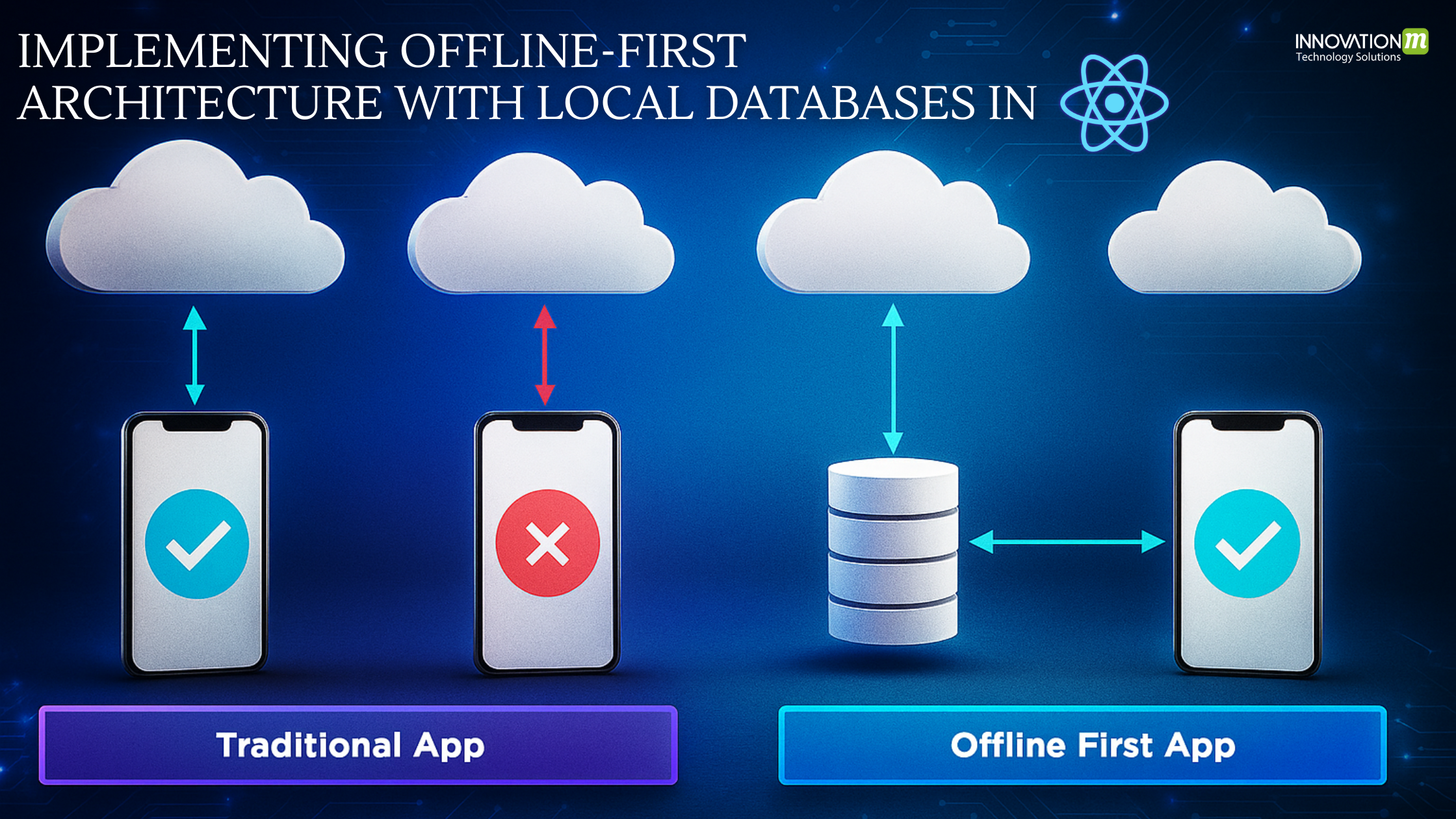
Offline-first is a development approach where the app stores all necessary data locally on the device and processes operations locally, then syncs changes to a central server when connectivity is restored. It is the opposite of the traditional approach, where every action requires a live server connection.
How the Technology Works
Modern offline-first apps use a local database on the device, typically SQLite for native apps or IndexedDB for Progressive Web Apps (PWAs). When a user performs an action, such as recording a sale, updating inventory, or booking an appointment, the app writes to the local database immediately. The user sees instant feedback with no waiting for a server response.
In the background, the app monitors connectivity. When a connection becomes available, it syncs the local changes to the cloud server and pulls down any updates from other devices or users. Conflict resolution logic handles situations where two users have made changes to the same record while offline, typically by timestamping changes and applying the most recent one, or by flagging conflicts for manual review.
The Key Technologies Behind Offline-First Apps
Several technologies make offline-first development practical in 2026:
- Service Workers: Background scripts that intercept network requests and serve cached responses when offline. Essential for PWAs.
- IndexedDB: A browser-based database that can store large amounts of structured data locally. Works in all modern browsers including Chrome on Android.
- SQLite: A lightweight relational database embedded directly in native mobile apps. Used by apps like WhatsApp and many banking apps.
- CRDTs (Conflict-free Replicated Data Types): Advanced data structures that allow multiple offline users to make changes that merge automatically without conflicts.
- Background Sync API: Allows PWAs to defer actions until connectivity is restored, even if the user has closed the app.
Offline-First vs. Offline-Capable: An Important Distinction
Many apps claim to work offline but are actually just offline-capable, meaning they cache some data for viewing but cannot process new transactions without a connection. True offline-first apps allow full functionality: creating records, processing payments (with local queuing), updating inventory, and generating reports, all without any internet connection. When evaluating an app for your Zimbabwe business, ask specifically whether you can complete a full transaction cycle while offline.
Three Zimbabwe Businesses That Solved Connectivity Problems with Offline-First Apps
Case Study 1: Chikwanda Hardware, Gweru
Chikwanda Hardware is a mid-sized building materials supplier in Gweru's industrial area, serving contractors and retail customers across the Midlands province. Before implementing an offline-first inventory and point-of-sale system, the business relied on a cloud-based system that required constant internet. During load shedding, which averaged four hours per day in 2025, staff reverted to paper records, creating reconciliation headaches and occasional stock discrepancies.
The business implemented a custom offline-first PWA that runs on tablets at each sales counter. The app stores the full product catalogue, current stock levels, and customer accounts locally. Sales staff can process transactions, print receipts via Bluetooth printer, and check stock in real time, all without internet. When connectivity returns, the system syncs automatically.
Results after six months: zero transaction failures due to connectivity, a 23% reduction in stock discrepancies (because paper records were eliminated), and a 15% increase in customer throughput during peak hours because transactions processed faster. The app cost $4,200 to build and has saved an estimated $800 per month in lost sales and reconciliation labour.
Case Study 2: Sunrise Pharmacy Chain, Harare
Sunrise Pharmacy operates four branches across Harare, including locations in Borrowdale, Avondale, Mbare, and Chitungwiza. The Chitungwiza branch in particular suffered from unreliable connectivity, with the local fibre provider experiencing frequent outages.
The pharmacy needed a system where pharmacists could check drug interactions, verify prescriptions, process sales, and manage controlled substance records even when offline. A native Android app was built with a local copy of the drug database (updated weekly when online), full prescription management, and EcoCash payment queuing. When a customer pays via EcoCash offline, the transaction is queued locally and submitted automatically when connectivity returns, with the customer receiving their SMS confirmation within minutes of the connection being restored.
The Chitungwiza branch saw a 31% increase in daily transactions after implementation, simply because staff were no longer waiting for the system to respond or manually recording sales during outages. The four-branch rollout cost $8,500 and paid for itself within four months through recovered revenue and reduced staff overtime for manual reconciliation.
Case Study 3: FastTrack Deliveries, Bulawayo
FastTrack Deliveries operates a fleet of 18 motorcycles and three vans delivering goods across Bulawayo and surrounding areas including Plumtree and Gwanda. Delivery drivers frequently move through areas with poor signal, and the previous system, a basic cloud app, would freeze or lose data when drivers entered dead zones.
A custom offline-first delivery tracking app was built for drivers' Android phones. The app stores the day's delivery manifest locally, allows drivers to capture proof of delivery (photos and signatures) offline, and records GPS coordinates even without a data connection using the device's built-in GPS. All data syncs when the driver returns to an area with signal.
The dispatch office sees near-real-time updates as drivers move through connected areas, and the end-of-day reconciliation that previously took two hours now takes 15 minutes because all data is already in the system. Customer satisfaction scores improved by 28% due to accurate delivery confirmations. The app cost $5,800 to build and reduced fuel costs by 12% through better route optimisation enabled by reliable data collection.
How to Evaluate Whether Your Business Needs an Offline-First App
Not every business needs a fully offline-first system. Here is a framework for evaluating your situation:
High Priority for Offline-First
- Your business operates in areas with frequent load shedding or poor signal
- Staff or customers use the app in locations with variable connectivity (delivery drivers, field sales teams, rural branches)
- A connectivity outage directly prevents revenue-generating transactions
- You handle sensitive data that cannot be lost if a connection drops mid-entry
- Your customers are on limited data bundles and you want to minimise their data usage
Lower Priority for Offline-First
- Your business operates in a single location with reliable fibre internet and a generator
- The app is primarily informational (a menu, a catalogue) rather than transactional
- Real-time data from multiple users is critical and conflicts would be difficult to resolve
What Offline-First Apps Cost to Build in Zimbabwe
Offline-first development adds complexity compared to a standard cloud-connected app, which is reflected in the cost. Here is a realistic breakdown for Zimbabwe businesses:
PWA with Offline-First Capability
A Progressive Web App with offline-first architecture, suitable for retail POS, inventory management, or service booking, typically costs between $3,500 and $7,000 to build in Zimbabwe. This includes the local database setup, sync logic, conflict resolution, and testing across different connectivity scenarios. Development time is typically 8 to 14 weeks.
Native Android App with Offline-First Architecture
A native Android app with full offline capability, suitable for field teams, delivery drivers, or multi-branch operations, costs between $6,000 and $14,000 depending on complexity. The higher cost reflects the more complex local database implementation and the need to handle Android's background processing restrictions. Development time is typically 12 to 20 weeks.
Multi-Platform (Android and iOS) Offline-First App
For businesses needing both Android and iOS support, a cross-platform framework like React Native or Flutter can deliver offline-first functionality on both platforms for $9,000 to $18,000, significantly cheaper than building two separate native apps.
Ongoing Costs
Offline-first apps require a backend server to receive synced data, which typically costs $30 to $80 per month on cloud hosting. The sync logic also needs ongoing maintenance as your data structure evolves, typically 2 to 4 hours of developer time per month at $25 to $40 per hour.
Key Features to Include in Your Offline-First App
When briefing a developer on an offline-first app for your Zimbabwe business, make sure these features are explicitly included in the scope:
Conflict Resolution Strategy
Define upfront how the app should handle conflicts when two users edit the same record offline. Common approaches include last-write-wins (simplest), first-write-wins (safer for financial records), or manual review queues for flagged conflicts.
Sync Status Indicators
Users need to know whether they are working with synced data or local-only data. A clear visual indicator, such as a coloured dot or a "Last synced: 14 minutes ago" timestamp, prevents confusion and builds trust in the system.
Offline Payment Queuing
For businesses accepting EcoCash or Paynow, the app should queue payment requests locally and submit them automatically when connectivity returns. Include clear messaging to customers about the queued status and send confirmation once the payment processes.
Data Compression
To minimise data usage when syncing, implement compression on all data transfers. This is particularly important for apps used by staff on personal data bundles or in areas where data is expensive.
Selective Sync
Not all data needs to be stored on every device. A delivery driver's app only needs today's manifests, not the full customer database. Selective sync reduces local storage requirements and speeds up the sync process.
Common Mistakes Zimbabwe Businesses Make with Offline Apps
Several pitfalls come up repeatedly when businesses implement offline-first systems:
Underestimating testing requirements: Offline-first apps need to be tested in real connectivity conditions, including simulated load shedding, weak signal, and the transition between offline and online states. Many developers test only in ideal conditions, leaving bugs that only appear in the field.
Ignoring storage limits: Mobile devices have limited storage. An app that caches too much data will fill up a device's storage, causing it to crash or refuse to sync. Set clear limits on how much historical data is stored locally and implement automatic cleanup of old records.
Not training staff on offline behaviour: Staff who are used to cloud apps may not understand that their offline actions will sync later. Clear training on what "offline mode" means, and what to do if a sync fails, prevents data loss and confusion.
Skipping the conflict resolution design: Leaving conflict resolution as an afterthought leads to data integrity problems. Design the conflict resolution strategy before development begins, not after.
Key Takeaways
- Offline-first apps store data locally and sync when connectivity is available, eliminating downtime caused by load shedding and poor signal.
- Zimbabwe businesses in retail, healthcare, logistics, and field services see the greatest benefit from offline-first architecture.
- PWAs with offline capability cost $3,500 to $7,000 to build; native Android offline-first apps cost $6,000 to $14,000.
- Key features to specify include conflict resolution strategy, sync status indicators, offline payment queuing, and selective sync.
- Proper testing in real connectivity conditions and staff training are as important as the technical implementation.
Frequently Asked Questions
Can an offline-first app process EcoCash payments without internet?
Not in real time. EcoCash requires a live connection to process and confirm a payment. However, an offline-first app can queue the payment request locally and submit it automatically when connectivity returns, typically within seconds to minutes. The customer receives their confirmation SMS once the payment processes. For high-value transactions, you may want to require connectivity before completing the sale.
How much local storage does an offline-first app use on a device?
This depends on the size of your data. A retail POS app with 500 products and 30 days of transaction history typically uses 50 to 150MB of local storage. A delivery app with route maps and photos may use 200 to 500MB. Modern Android devices have 32GB to 128GB of storage, so this is rarely a problem, but it should be planned for during development.
What happens if a staff member's phone is lost or stolen while they have unsynced data?
This is a real risk that should be addressed in the app design. Best practices include syncing frequently (every few minutes when connected), requiring a PIN or biometric to access the app, and implementing remote wipe capability. For sensitive data like financial records, consider encrypting the local database so it cannot be read if the device is compromised.
Can multiple staff members use the same offline-first app simultaneously?
Yes, but this requires careful design. Each device maintains its own local database, and the sync process merges changes from all devices. The conflict resolution strategy becomes critical when multiple users are editing the same records. For most retail and service businesses, the built-in conflict resolution handles this automatically. For complex scenarios, a developer can implement custom merge logic.
How long does it take to build an offline-first app for a Zimbabwe business?
A PWA with offline-first capability typically takes 8 to 14 weeks from brief to launch. A native Android app takes 12 to 20 weeks. These timelines include design, development, testing in offline conditions, and a pilot period with a small group of users before full rollout. Rushing the testing phase is the most common cause of problems after launch.
Related Articles
About ZimNinja Apps Team
ZimNinja Apps is Zimbabwe's leading PWA development company, specializing in affordable, high-performance Progressive Web Apps for small and medium businesses. Based in Bulawayo and serving clients across Zimbabwe, we've helped hundreds of businesses transform their operations through smart digital solutions.