USSD Integration for Zimbabwe Business Apps: Reaching Every Customer, Smartphone or Not
Why USSD Still Matters in Zimbabwe in 2026
Walk into any market in Mbare, Sakubva, or Luveve and you will see something that surprises many tech entrepreneurs: the majority of transactions still happen on feature phones. Not smartphones. Not apps. A simple keypad phone dialling a short string of numbers like *151# or *335# and completing a payment in under 30 seconds.
Zimbabwe has one of Africa's most active USSD ecosystems. With smartphone penetration sitting at roughly 45% of the adult population, more than half of your potential customers cannot download your app, cannot load a web page reliably, and cannot use a QR code scanner. But almost every one of them has a mobile phone that supports USSD, and almost every one of them has a mobile money account.
If your business app does not have a USSD channel, you are leaving a significant portion of the Zimbabwe market completely unreachable. This guide explains exactly how USSD integration works, what it costs, how to set it up, and what real Zimbabwe businesses have achieved by adding USSD to their digital stack.
What Is USSD and How Does It Work?
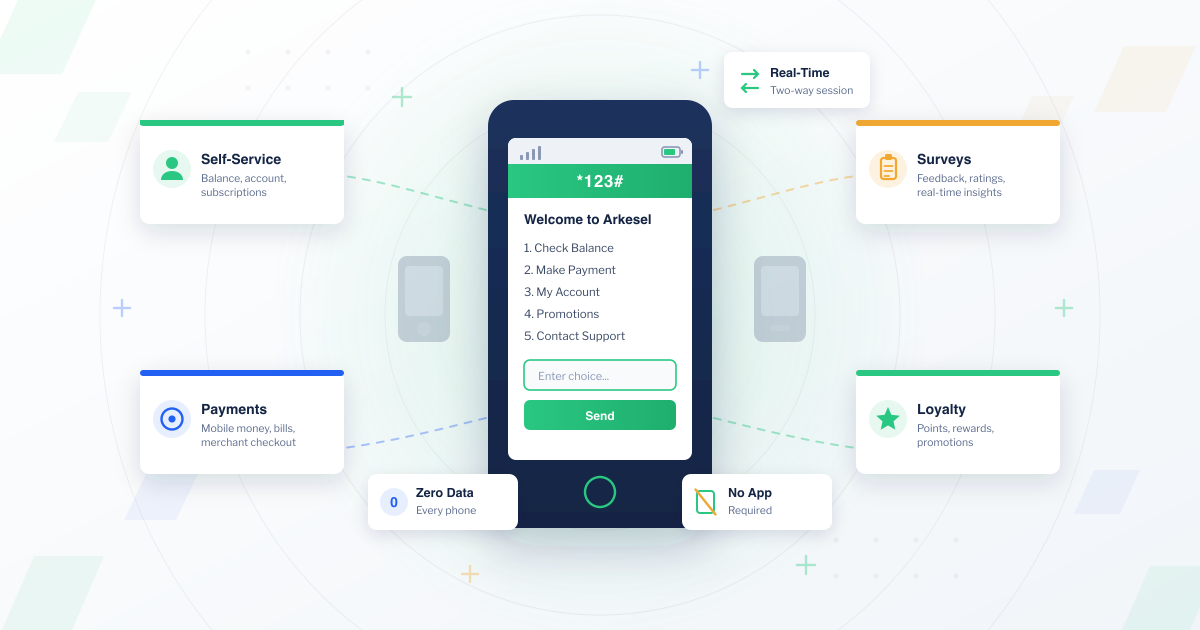
USSD stands for Unstructured Supplementary Service Data. It is a communication protocol built into every GSM mobile network, which means it works on every mobile phone ever made, from a basic Nokia 3310 to the latest iPhone. Unlike SMS, USSD creates a real-time session between the user's phone and a server, making it ideal for interactive menus and instant transactions.
The USSD Session Flow
When a customer dials a USSD shortcode (for example, *335# for EcoCash), the following happens in sequence:
- The mobile network (Econet, NetOne, or Telecel) receives the dial request and routes it to the USSD gateway.
- The gateway sends the request to your application server via an API call.
- Your server processes the request and returns a menu or response string.
- The network displays that response on the customer's phone screen.
- The customer selects an option or enters data, and the cycle repeats until the session ends.
The entire session typically completes in under 60 seconds. There is no internet connection required on the customer's side. The only requirement is a mobile network signal, which covers over 90% of Zimbabwe's populated areas.
USSD vs SMS vs App: A Practical Comparison
- USSD: Real-time, interactive, works on all phones, no internet needed, session-based, free for the customer on most networks.
- SMS: One-way or two-way messaging, works on all phones, no internet needed, but not interactive in real time and costs per message.
- App: Rich interface, full functionality, requires smartphone and internet, best user experience but limited reach in Zimbabwe.
The smart approach is not to choose one channel. It is to build all three into your business platform so every customer, regardless of their device, can transact with you.
The Zimbabwe USSD Landscape: Networks and Gateways
Zimbabwe has three mobile networks that support USSD services for businesses: Econet Wireless, NetOne, and Telecel Zimbabwe. Each network has its own USSD gateway and shortcode allocation process, but several aggregator platforms allow you to reach all three networks through a single API integration.
Key USSD Aggregators Operating in Zimbabwe
- Paynow USSD: Paynow offers a USSD payment channel that connects to EcoCash, OneMoney, and Telecash, allowing customers on any network to pay via USSD without a smartphone.
- Econet USSD Gateway: Direct integration with Econet's USSD infrastructure, ideal for businesses whose primary customer base is on Econet (which holds roughly 65% of Zimbabwe's mobile subscribers).
- NetOne USSD Services: NetOne provides USSD shortcode services for businesses targeting government employees and rural customers who tend to use NetOne's OneMoney platform.
- Third-party aggregators: Platforms like Webdev Zimbabwe and local fintech providers offer multi-network USSD APIs that simplify integration across all three networks.
Shortcode Types Available to Zimbabwe Businesses
There are two main types of USSD shortcodes available:
- Dedicated shortcodes: A unique code assigned exclusively to your business (e.g., *123#). These cost more but give your brand a memorable, standalone identity.
- Shared shortcodes with sub-menus: Your business gets a sub-menu under a shared shortcode (e.g., *335*7#). These are more affordable and faster to set up, making them ideal for small and medium businesses.
What Can You Build With USSD Integration?
USSD is more versatile than most Zimbabwe business owners realise. Here are the most common and highest-value use cases:
1. USSD Payment Collection
Allow customers to pay for goods and services by dialling your shortcode, selecting a payment option, and confirming with their mobile money PIN. This works for retail shops, service businesses, schools, and any business that currently relies on cash or card payments.
2. Order Placement and Tracking
Customers can place orders through a USSD menu, receive an SMS confirmation, and check order status by dialling the shortcode again. This is particularly powerful for food delivery, pharmacy orders, and hardware supply businesses.
3. Account Balance and Statement Enquiries
For businesses that run loyalty programmes, credit accounts, or subscription services, USSD lets customers check their balance, points, or account status without needing internet access.
4. Appointment Booking
Clinics, salons, and service businesses can allow customers to book appointments via USSD, with automated SMS reminders sent to confirm the booking.
5. Survey and Feedback Collection
After a transaction, trigger a USSD session to collect customer feedback. Response rates for USSD surveys in Zimbabwe are significantly higher than email or web-based surveys because the interaction happens immediately on the customer's phone.
6. Staff Management and Field Reporting
Field agents, delivery drivers, and sales representatives who do not have smartphones can use USSD to log deliveries, report stock levels, or submit daily sales figures directly from their feature phones.
Real Zimbabwe Business Examples
The following examples are based on real business scenarios from Zimbabwe's market, with business names changed for privacy.
FreshFarm Agro Supplies, Mutare: Reaching Rural Farmers
FreshFarm Agro Supplies in Mutare sells fertiliser, seeds, and farming inputs to smallholder farmers across Manicaland. Their customer base is predominantly rural, with limited smartphone access and patchy internet connectivity. Before USSD integration, farmers had to travel to Mutare town to place orders and make payments, a round trip that could take half a day.
After integrating a USSD ordering system through a local aggregator, farmers can now dial *335*88# from any phone, browse available stock, place an order, and pay via EcoCash or OneMoney in under two minutes. FreshFarm reports the following results after six months:
- Order volume increased by 73% as rural farmers who previously could not order remotely began transacting regularly.
- Average order value increased by 18% because customers could browse the full product menu rather than ordering only what they remembered from a previous visit.
- Cash handling at the Mutare depot dropped by 60%, reducing theft risk and reconciliation time.
- Customer acquisition cost dropped because word-of-mouth spread quickly among farming communities once the USSD service launched.
QuickMeds Pharmacy, Gweru: USSD Prescription Refills
QuickMeds Pharmacy in Gweru serves a large base of chronic medication patients who need monthly prescription refills. Many of these patients are elderly and do not use smartphones. The pharmacy integrated a USSD prescription refill system that allows patients to dial a shortcode, enter their patient ID, select their medication, and pay via mobile money. The pharmacy then prepares the order for collection or delivery.
Results after four months of operation:
- Prescription refill compliance improved by 34% because patients no longer needed to make a special trip to initiate a refill.
- Queue times at the pharmacy counter dropped by 40% as pre-ordered prescriptions were ready for collection on arrival.
- Monthly recurring revenue from chronic medication patients increased by $2,800 per month due to improved retention.
- Staff time spent on phone-based order taking dropped by 55%, freeing pharmacists to focus on dispensing and patient counselling.
BuildRight Hardware, Harare: Trade Account Management via USSD
BuildRight Hardware in Harare's Workington industrial area supplies building materials to contractors and construction companies. Many of their trade customers are site foremen and small contractors who use basic phones on site. BuildRight integrated a USSD account management system that allows trade customers to check their credit balance, place material orders, and request delivery scheduling without needing internet access.
Key outcomes after eight months:
- Trade account customers increased by 28% as the USSD channel made it practical for smaller contractors to manage accounts remotely.
- Order processing time dropped from an average of 45 minutes (phone call plus manual entry) to under 5 minutes (USSD order plus automated processing).
- Late payments on trade accounts dropped by 22% because customers could check balances and pay via mobile money directly through the USSD system.
- Delivery scheduling efficiency improved, with fewer missed or delayed deliveries due to clearer order confirmation via SMS after USSD placement.
How to Integrate USSD Into Your Zimbabwe Business App
The integration process has several stages. Here is a practical roadmap for Zimbabwe businesses:
Stage 1: Define Your USSD Menu Structure
Before writing a single line of code, map out the complete menu flow your customers will experience. Keep menus simple: no more than five options per screen, use plain language, and design for a customer who may be using USSD for the first time. Test your menu flow on paper before building it.
Stage 2: Choose Your Integration Approach
You have two main options:
- Direct network integration: Apply directly to Econet, NetOne, or Telecel for a USSD shortcode. This gives you the most control but requires more paperwork, a longer approval process (typically 4 to 8 weeks), and higher setup costs.
- Aggregator integration: Use a USSD aggregator that already has agreements with all three networks. Setup is faster (typically 1 to 2 weeks), costs are lower, and you get multi-network reach from day one. This is the recommended approach for most Zimbabwe businesses.
Stage 3: Build the USSD Application Logic
Your development team (or ZimNinja Apps) builds the server-side application that handles USSD session requests. The application receives a POST request from the USSD gateway containing the session ID, phone number, and customer input, processes the request, and returns the appropriate menu or response. This can be built in any server-side language: Node.js, Python, PHP, or Java are all commonly used in Zimbabwe.
Stage 4: Connect to Your Existing Business App
The USSD application should connect to the same database and business logic as your main app. This means an order placed via USSD appears in your app's order management system, a payment made via USSD updates the same customer account, and a booking made via USSD shows in your scheduling calendar. Siloed USSD systems that do not connect to the main platform create reconciliation headaches and poor customer experiences.
Stage 5: Test Across All Networks
Test your USSD service on Econet, NetOne, and Telecel SIM cards before going live. USSD behaviour can vary slightly between networks, and edge cases (session timeouts, invalid inputs, network drops) must be handled gracefully. A customer who gets an error message mid-transaction is unlikely to try again.
Stage 6: Launch and Educate Your Customers
USSD adoption requires customer education. Print the shortcode on receipts, packaging, and signage. Train your staff to demonstrate the USSD flow to customers. Consider running a promotion for first-time USSD users (a small discount or bonus) to drive initial adoption.
USSD Integration Costs in Zimbabwe
Cost is one of the most common questions Zimbabwe business owners ask about USSD. Here is a realistic breakdown:
Setup Costs
- Aggregator setup fee: $200 to $500 once-off, depending on the provider and shortcode type.
- Development cost: $800 to $2,500 for a custom USSD application integrated with your existing business app, depending on complexity. A simple payment collection USSD is at the lower end; a full order management and account system is at the higher end.
- Network registration fees: If going direct to networks, expect $300 to $800 per network for shortcode registration and approval.
Ongoing Costs
- Monthly aggregator fee: $50 to $150 per month for platform access and multi-network routing.
- Per-session fees: Most aggregators charge $0.01 to $0.03 per USSD session. For a business processing 500 sessions per month, this is $5 to $15 per month, a negligible cost relative to the revenue generated.
- SMS notification costs: If you send SMS confirmations after USSD transactions, budget $0.02 to $0.05 per SMS.
ROI Calculation Example
Consider a Harare retail shop with 200 USSD transactions per month at an average order value of $15. That is $3,000 in monthly revenue from the USSD channel. Total monthly USSD costs (aggregator fee plus session fees) would be approximately $80 to $120. The return on that investment is clear: every dollar spent on USSD infrastructure generates roughly $25 to $35 in revenue from customers who would otherwise be unreachable.
Common Mistakes Zimbabwe Businesses Make With USSD
Having helped multiple Zimbabwe businesses integrate USSD, we have seen the same mistakes come up repeatedly. Avoid these:
Mistake 1: Menus That Are Too Long or Complex
USSD screens have a character limit (typically 182 characters). Businesses that try to cram too much information into a single screen create confusing, truncated menus. Keep each screen focused on one decision or action.
Mistake 2: Not Handling Session Timeouts
USSD sessions time out after approximately 180 seconds of inactivity. If your application does not handle timeouts gracefully, customers who pause mid-transaction will get an error and lose their progress. Build timeout handling that saves session state and allows customers to resume.
Mistake 3: Building USSD in Isolation
A USSD system that does not connect to your main business platform creates two separate data silos. Orders placed via USSD must be manually transferred to your main system, which defeats the purpose of automation. Always integrate USSD with your core business app from the start.
Mistake 4: Ignoring the Telecel and NetOne Customer Base
Many businesses focus only on Econet because it has the largest subscriber base. But NetOne's OneMoney has significant penetration among government employees, teachers, and rural communities. Telecel has a loyal base in certain urban areas. A multi-network USSD service reaches all of them.
Mistake 5: No Customer Education Plan
Launching a USSD service without telling customers it exists is a common failure. Budget for in-store signage, staff training, and a launch promotion. The technology is only as valuable as the number of customers who use it.
Key Takeaways
- USSD reaches the majority: With smartphone penetration at roughly 45% in Zimbabwe, USSD is the only digital channel that reaches every mobile phone user, including the 55% on feature phones.
- Integration is affordable: A functional USSD integration costs $1,000 to $3,000 to build and $80 to $150 per month to operate, with ROI typically achieved within the first month of operation.
- Connect USSD to your main app: USSD should be a channel into your existing business platform, not a standalone system. Orders, payments, and customer data must flow into the same database.
- Multi-network reach matters: Use an aggregator to reach Econet, NetOne, and Telecel customers from a single integration rather than building separate systems for each network.
- Customer education drives adoption: The technology works, but customers need to know it exists. Invest in signage, staff training, and a launch promotion to drive initial usage.
Frequently Asked Questions
Does USSD work without internet on the customer's phone?
Yes. USSD operates entirely over the mobile network's signalling channel, not the internet. Customers need only a mobile network signal, not data connectivity. This is what makes USSD so powerful in Zimbabwe's context, where data costs remain high and connectivity is inconsistent outside major urban centres.
How long does it take to get a USSD shortcode in Zimbabwe?
Through an aggregator, you can typically have a working USSD service within 1 to 2 weeks. Direct network registration takes 4 to 8 weeks due to the approval process. For most businesses, starting with an aggregator is the fastest path to market.
Can USSD handle payments securely?
Yes. USSD payment sessions are secured by the mobile network's encryption and the customer's mobile money PIN. The customer never shares their PIN with your business; they enter it directly into the mobile money platform (EcoCash, OneMoney, or Telecash) as part of the payment confirmation step. This is the same security model used by all mobile money transactions in Zimbabwe.
What happens if a customer loses network signal during a USSD session?
The session terminates. If the customer was mid-transaction, the transaction does not complete. Your application should be designed to handle incomplete sessions gracefully, either by saving the session state so the customer can resume, or by sending an SMS prompting them to try again. Payments are only processed after full confirmation, so there is no risk of a customer being charged for an incomplete transaction.
Can I use USSD alongside my existing app and website?
Absolutely, and this is the recommended approach. USSD, your mobile app, and your website should all be channels into the same business platform. A customer who places an order via USSD should see that order in your app if they later log in on a smartphone. This omnichannel approach gives every customer the best possible experience regardless of their device.
Related Articles
About ZimNinja Apps Team
ZimNinja Apps is Zimbabwe's leading PWA development company, specializing in affordable, high-performance Progressive Web Apps for small and medium businesses. Based in Bulawayo and serving clients across Zimbabwe, we've helped hundreds of businesses transform their operations through smart digital solutions.